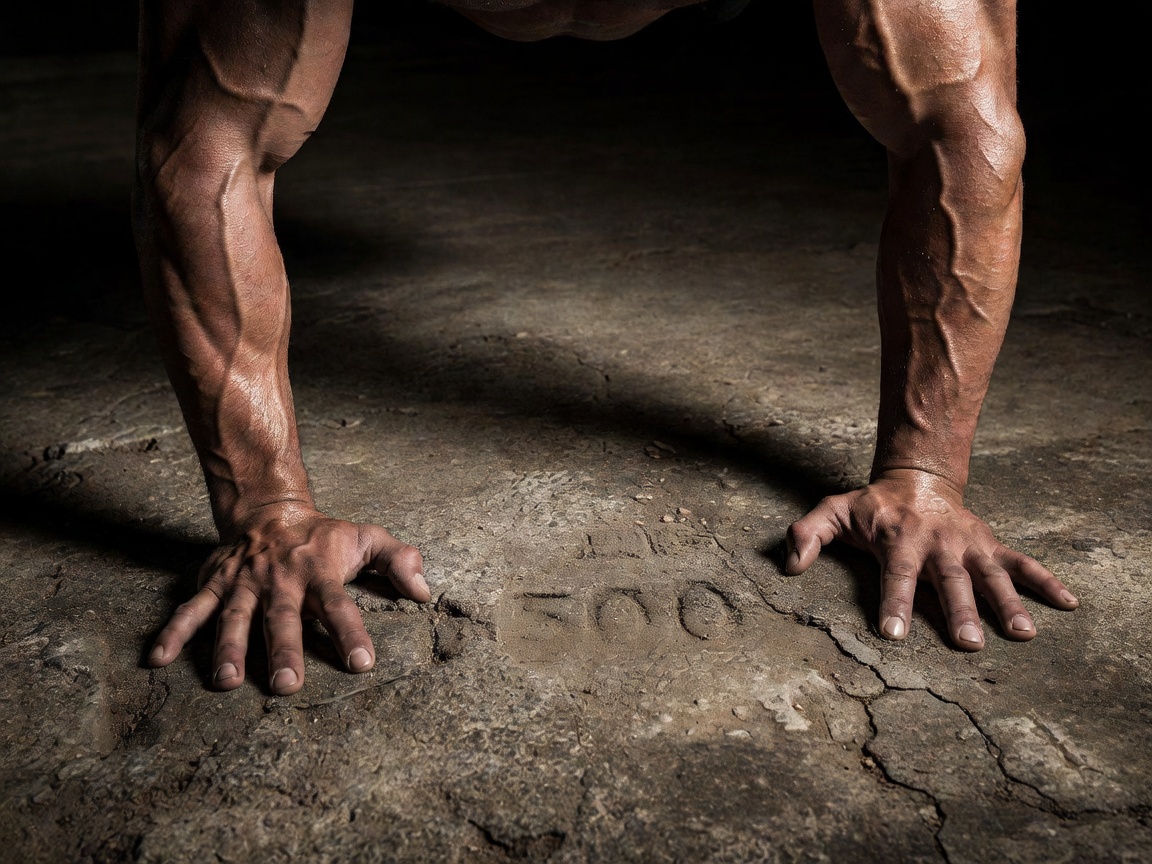
Bipedalism is the defining trait of hominid evolution, optimizing the lower limbs for weight-bearing and efficient forward momentum. Hand-walking, conversely, demands that the highly articulated, delicate structures of the upper extremities perform tasks for which they are evolutionarily unsuited. Records concerning long-distance or unbroken hand-walking represent a profound subversion of human biomechanics.
Structural Limitations of the Upper Extremities
The human shoulder is a shallow ball-and-socket joint (glenohumeral joint) designed for a vast range of motion, unlike the deep, stable socket of the hip. When subjected to the full weight of the body in an inverted position, the primary stabilizing force shifts entirely to the rotator cuff musculature and the deltoids. Sustained compressive forces over several kilometers can lead to severe impingement syndromes and micro-tears in these stabilizing muscles.
Furthermore, the bones of the wrist (carpals) and hands are designed for fine motor skills and grasping, not for enduring repeated concussive impacts against solid surfaces. Extreme hand-walkers often develop severe bone remodeling, micro-fractures, and thickened calluses (hyperkeratosis) to protect the underlying carpal tunnel structures.
Cardiovascular and Hemodynamic Strain
Inversion drastically alters hemodynamics. The human circulatory system utilizes venous valves in the legs to assist blood return to the heart against gravity. When inverted, blood rapidly pools in the cranium and upper torso. The heart must pump forcefully against a reversed gravitational gradient to supply oxygenated blood to the working muscles of the arms, leading to rapid spikes in blood pressure (hypertension) in the upper body and head.
This hemodynamic shift severely limits endurance. While a trained athlete can run marathons continuously, hand-walking limits are dictated primarily by the point at which cranial blood pressure causes vertigo, visual disturbances, or when localized muscular failure in the triceps and shoulders occurs due to oxygen deprivation.
Training Methodologies
Preparation for distance records in this category focuses on hyper-trophic adaptation of the upper body and strict core conditioning.
- Core Locking: To prevent energy leakage, the spine must be held entirely rigid. Any sway in the lower body creates a pendulum effect, placing exponential lateral strain on the wrists.
- Gradient Conditioning: Athletes train on declining gradients to artificially increase the load on the wrists, building structural density in the bones and tendons before attempting flat-ground distance records.
- Pace Modulation: Speed is entirely sacrificed for efficiency. The gait is slow, ensuring the center of mass remains perfectly balanced over the supporting limb to minimize muscular engagement required for stabilization.
Documenting these records provides critical data to kinesiologists regarding the absolute adaptability limits of the human skeletal and circulatory systems when subjected to sustained, unnatural parameters.